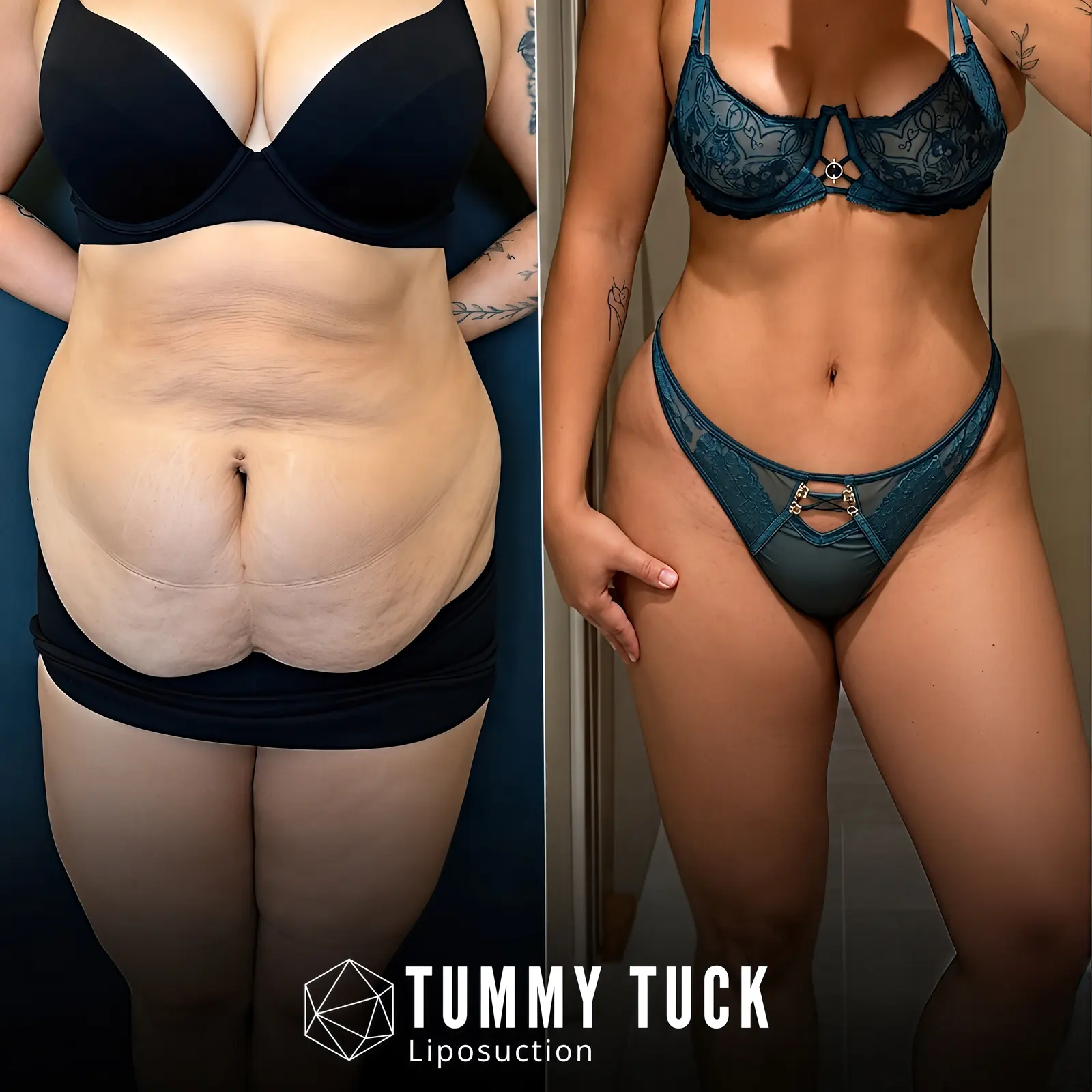
The short answer is no: the fat cells that liposuction removes do not come back. What can change is the size of the fat cells that remain. If you gain weight after surgery, those cells fill up again, both in the treated area and in areas that were never treated. That is why keeping your weight stable matters so much for your result.
How fat cells behave in adults
In adults, the number of fat cells stays fairly constant. When you gain weight, the existing cells mostly get larger; when you lose weight, they get smaller, but they do not disappear. This explains why some areas, such as the lower tummy, flanks or inner thighs, can stay stubborn even after diet and exercise: the cells there shrink, but there are still many of them.
Liposuction works differently. It physically removes a share of the fat cells from a chosen area. Because those cells are no longer there, that area has less capacity to store fat in future.
What liposuction removes, and what it leaves
It helps to know exactly what liposuction does and does not change:
- It removes part of the fat under the skin (subcutaneous fat) in the areas your surgeon treats.
- It deliberately leaves a thin, even layer of fat under the skin, which keeps the surface smooth and protects the skin.
- It does not remove the fat deep inside the abdomen, around the organs (visceral fat).
- It does not change the fat in areas that were not treated.
What happens if you gain weight after liposuction
A few kilos up or down usually makes little visible difference. With a larger gain, the remaining fat cells everywhere get bigger. Because the treated area has fewer cells, it tends to fill out less than before, so your proportions often still look better than they did before surgery. With a significant gain, however, the treated area can also become fuller again, and untreated areas such as the upper tummy, back, arms or face may show the extra weight more clearly. Some studies suggest that after liposuction, regained fat may appear more in untreated areas.
| Weight after surgery | What you usually see |
|---|---|
| Stable, within a few kilos | The new contour stays |
| Moderate gain | Some fullness returns, spread more evenly; the treated area usually stays relatively slimmer |
| Large gain | Treated areas can fill out again and untreated areas change more |
| Weight gain inside the abdomen | The tummy can become firm and round; liposuction cannot treat this fat |
Pregnancy and hormonal changes, for example around the menopause, can also change where your body stores fat. If you are planning a pregnancy soon, talk to your surgeon about timing.
Swelling is not fat coming back
In the first weeks the treated areas are swollen, and some parts can feel firm or slightly lumpy. Many people worry that the fat has returned, but this is fluid and healing tissue. You usually see most of the change after 6–8 weeks, and the final contour after 3–6 months, as the last swelling goes down and the skin tightens over the new shape.
Small, firm areas under the skin are common in the first months and usually soften with time. They are healing tissue, not new fat, and they do not mean the operation has failed. Your surgeon can check any area that worries you during a follow-up.
Wearing your compression garment as advised (usually 4–6 weeks), walking often and, where your surgeon recommends it, lymphatic drainage massage all help the swelling settle smoothly.
How to keep your result
- Keep your weight stable. Weigh yourself regularly and act early if the trend goes up.
- Return to exercise once your surgeon agrees, usually after about 4 weeks for gym training, with walking from the first day.
- Eat regular, balanced meals with enough protein, and avoid crash diets that lead to cycles of loss and regain.
- Keep alcohol moderate. It adds calories and tends to increase fat around the middle.
- Plan big life changes with your surgeon, such as a pregnancy or a large planned weight loss.
If you do gain weight, losing it again usually brings much of the improved shape back, because the treated area still has fewer fat cells than before. The result of liposuction is not lost with a few extra kilos; it simply becomes less clear while the weight is there.
Who keeps the result most easily
Liposuction suits people who are close to their ideal weight, often within about 10–15 kg, whose weight has been stable for some months and whose skin is still elastic. If you are still losing weight, it is usually better to reach a stable weight first, so the operation shapes the body you will keep. If your skin hangs loosely, liposuction alone may not be enough, and your surgeon may suggest a skin-tightening operation such as a tummy tuck.
When to contact your surgeon
Most changes after liposuction are part of normal healing. Contact your surgeon if you notice a lump that keeps growing, a sudden increase in swelling on one side, fever, spreading redness, or an uneven area that has not improved after 6 months. Seek emergency care straight away for chest pain, sudden breathlessness or a swollen, painful calf.
If you are thinking about treating stubborn fat, our Vaser liposuction page explains how the technique works, which areas can be treated, who it suits and what your stay in Istanbul looks like.
Frequently asked questions
The fat cells that were removed do not come back. The remaining cells can grow if you gain weight, so a stable weight protects your result.
It is stored in the remaining fat cells all over the body. Treated areas have fewer cells, so untreated areas such as the upper tummy, back or arms may show weight gain more clearly.
The removal of fat cells is permanent. Your shape can still change with weight gain, pregnancy and ageing, as it would without surgery.
That is swelling, not fat. It goes down gradually over weeks, and the final contour shows after about 3–6 months.
It is possible in some cases, but repeat liposuction is technically more demanding. Your surgeon will advise after examining you.