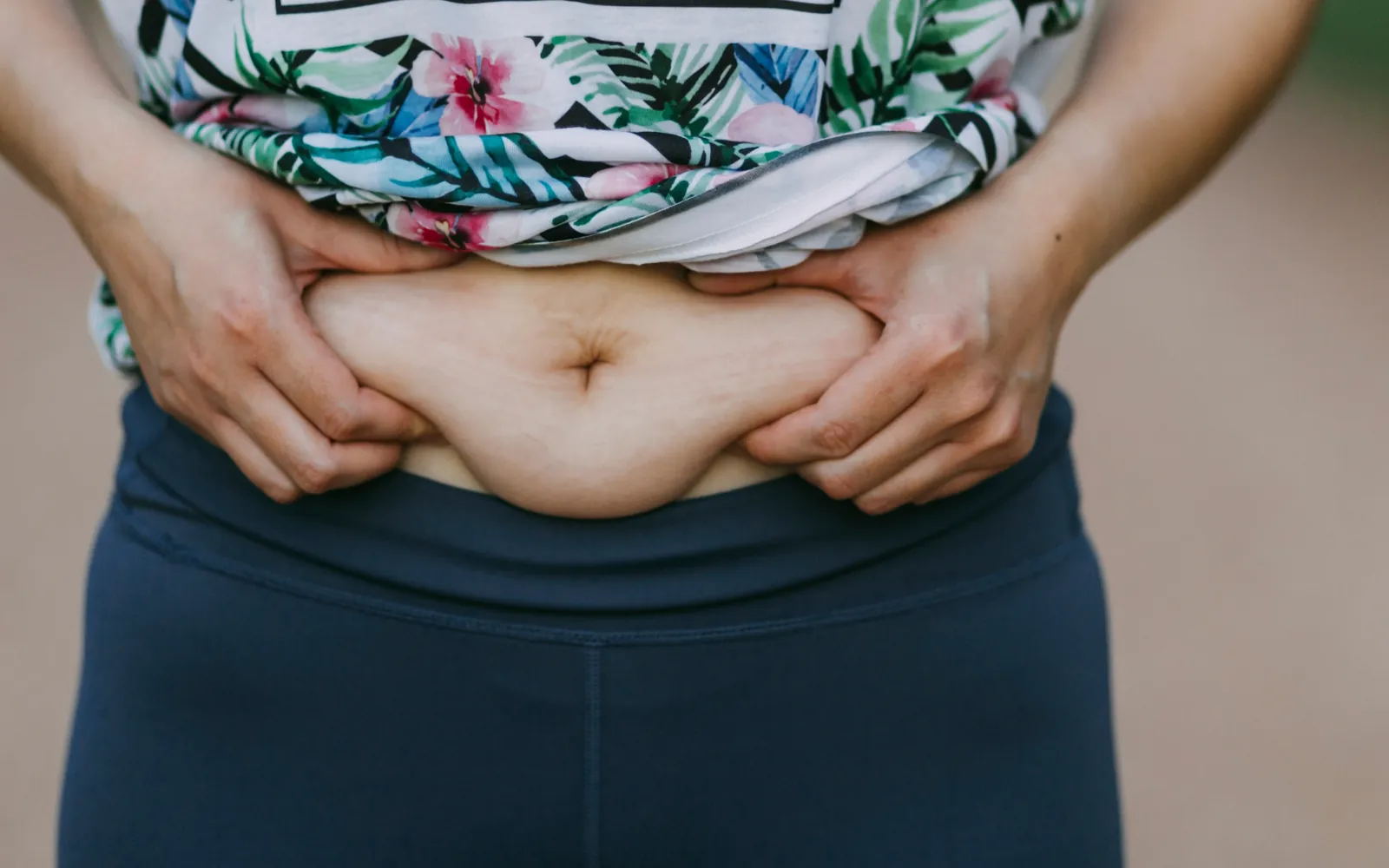
Liposuction and a tummy tuck both flatten the abdomen, but they treat different problems. Liposuction removes fat. A tummy tuck removes loose skin and repairs stretched or separated tummy muscles. Which one you need depends less on how much you would like to change and more on what is causing the shape you see: fat, skin, muscle or a mix of all three.
What liposuction does
Liposuction removes fat through small incisions using a thin tube called a cannula. Some techniques, such as ultrasound-assisted liposuction, loosen the fat before it is removed. Liposuction can treat the abdomen, flanks, back, thighs and arms.
It relies on your skin to shrink back over the new contour. If your skin is elastic, it adapts well. If it is already loose or marked by many stretch marks, removing the fat underneath can make the skin look looser.
Liposuction only removes fat that lies under the skin. It does not treat cellulite, and it cannot reach the fat inside the abdomen around the organs (visceral fat), which can make a tummy look round and firm. If that type of fat is the cause, weight loss and lifestyle changes are the answer, not surgery.
What a tummy tuck does
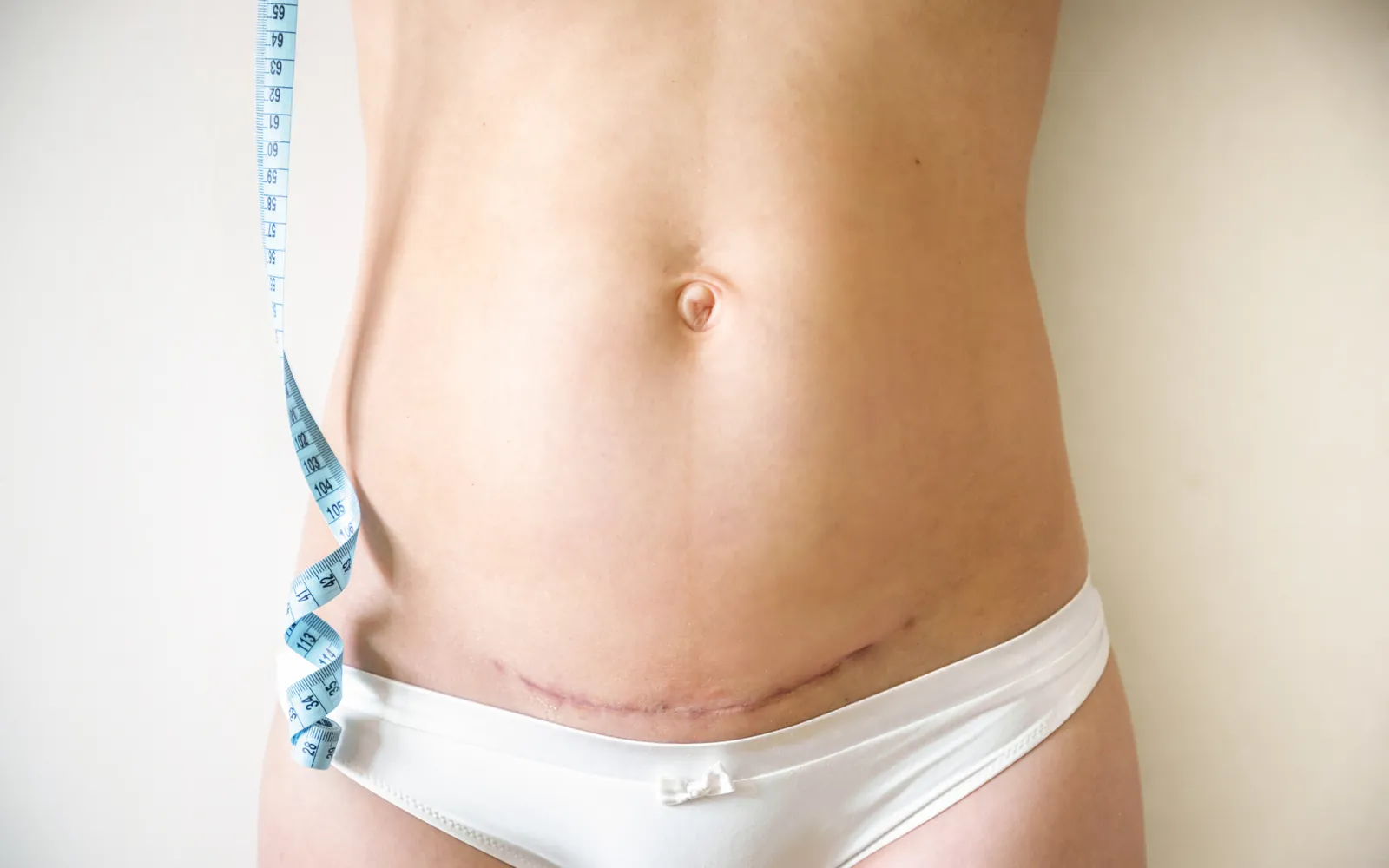
A tummy tuck (abdominoplasty) removes excess skin and fat below the belly button, stitches separated abdominal muscles back together and repositions the belly button so it looks natural. It treats the overhanging skin and lower belly “pouch” that often remain after pregnancy or major weight loss. A mini tummy tuck treats a smaller area below the belly button through a shorter scar.
Which one do you need?
Your surgeon decides after examining you, but these situations give you a first idea.
| Your situation | Usually points to |
|---|---|
| Firm, elastic skin with pockets of stubborn fat | Liposuction |
| Loose or overhanging skin below the belly button | Tummy tuck |
| A bulge that stays even at a healthy weight, or a gap between the tummy muscles | Tummy tuck with muscle repair |
| Stretch marks below the belly button that you would like removed | Tummy tuck |
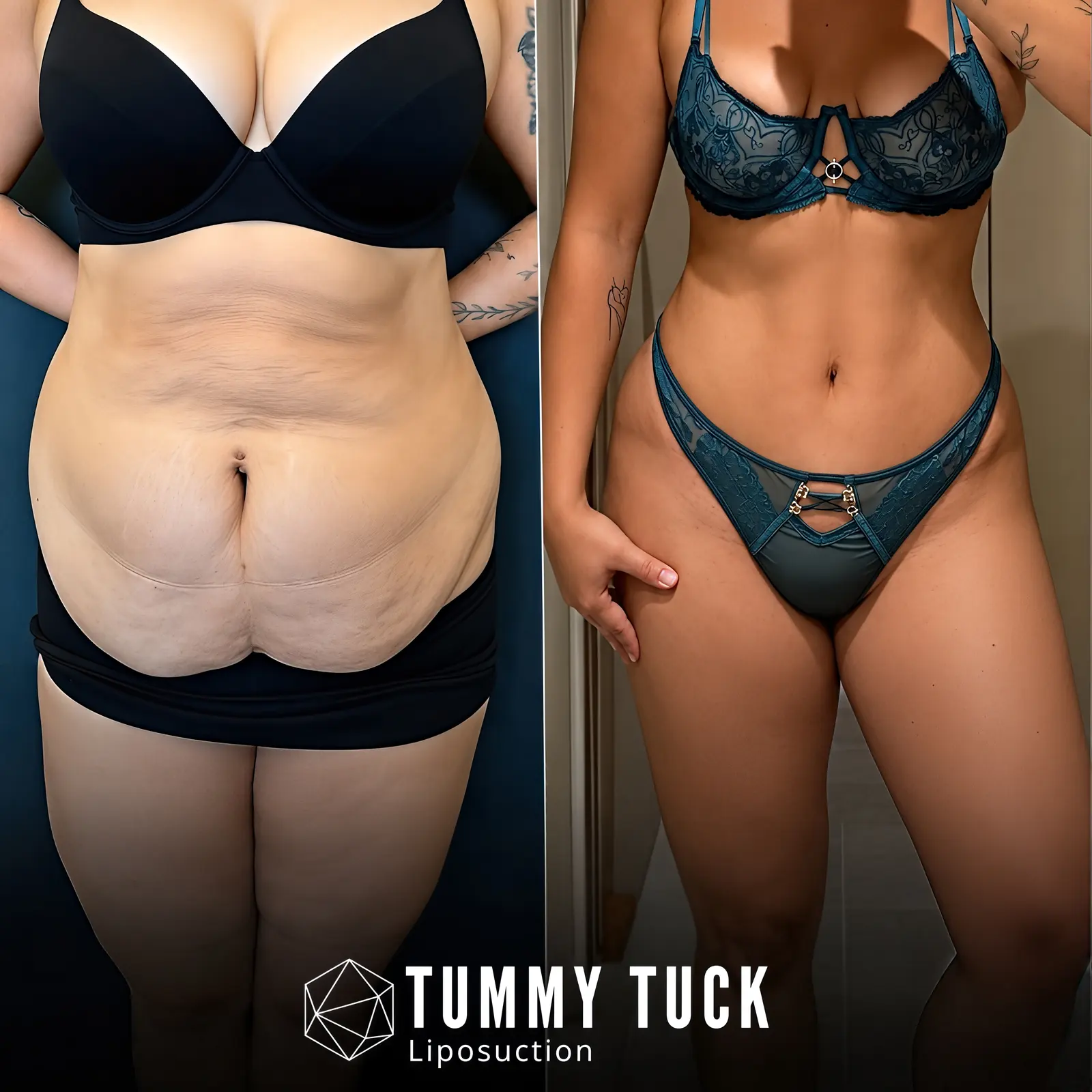
| Loose skin on the tummy plus extra fat on the flanks | Tummy tuck combined with liposuction |
| A small lower belly pouch with good skin above the navel | Mini tummy tuck, sometimes with liposuction |
A simple check at home: stand, relax and gently pinch the skin below your belly button. If you mainly grab soft fat and the skin springs back, liposuction may suit you. If the skin folds, hangs or feels thin and loose, removing fat alone is unlikely to give a flat result.
After pregnancy: why liposuction alone often disappoints
After one or more pregnancies, the lower belly usually changes in three ways at once: the skin stretches, stretch marks appear and the tummy muscles separate. Liposuction addresses none of these, so women who hoped it would flatten a post-pregnancy tummy are often disappointed. In that situation, a tummy tuck, or a mommy makeover if the breasts have also changed, is the operation that matches the problem. If your main concern after pregnancy is some extra fat on the flanks and your skin is firm, liposuction can be enough.
For men the picture is similar. Firm skin with fat on the flanks and tummy often responds well to liposuction, while loose skin after weight loss needs a tummy tuck.
Liposuction vs tummy tuck at a glance
| Liposuction | Tummy tuck | |
|---|---|---|
| Removes | Fat | Skin and fat; repairs muscles |
| Scars | A few small incisions | Low hip-to-hip scar plus a scar around the belly button |
| Anaesthesia | General, or local with sedation | General anaesthesia |
| Hospital stay | 1 night | 2 nights |
| Stay in Istanbul | About 7 days | 8 nights (flight home on day 9) |
| Back to desk work | After about 1 week | After 2–3 weeks |
| Exercise | After about 4 weeks | After about 6 weeks |
| Compression garment | About 4–6 weeks | About 6 weeks |
| Final result | 3–6 months | 3–6 months (scar matures in 12–18 months) |
When the two are combined
Many tummy tucks include some liposuction. Fat on the flanks and back is removed in the same operation to shape the waist, so the flat abdomen blends with the rest of the body. The fat can also be transferred to the buttocks, which is a tummy tuck with BBL. Your surgeon decides how much liposuction can be done alongside the tummy tuck, because the lifted skin needs a good blood supply to heal.
If you have both loose skin and stubborn fat, having liposuction first and a tummy tuck later rarely saves you anything: the skin problem remains, and you go through two recoveries. A single, well-planned operation is usually the more sensible route.
Risks to know about
Both are surgery and carry risks such as bleeding, infection, blood clots and changes in skin sensation. Liposuction can leave contour irregularities; a tummy tuck has a longer scar and a higher chance of seroma and wound healing problems. Stopping nicotine for 4 weeks before and after surgery, walking early and wearing your compression garment reduce many of these risks.
Contact your surgeon straight away for a swollen, painful calf, fever or a wound that oozes, and seek emergency care for chest pain or sudden breathlessness.
Our Tummy Tuck page explains the different types, from mini to extended, who is a good candidate and what the package includes. A surgeon can look at your photos and tell you whether liposuction, a tummy tuck or a combination fits your body.
Frequently asked questions
No. Liposuction removes fat. Elastic skin may tighten a little afterwards, but loose or overhanging skin has to be removed surgically, for example with a tummy tuck.
No. Separated tummy muscles can only be repaired surgically, which is part of a full tummy tuck.
Liposuction. Most people return to desk work after about a week, compared with 2–3 weeks after a tummy tuck.
It is possible, but if you already have loose skin, a tummy tuck with liposuction in one operation usually gives a more complete result with one recovery. Your surgeon will advise.
The fat cells that were removed do not return, but the remaining fat cells can grow if you gain weight. Keeping a stable weight keeps the result.