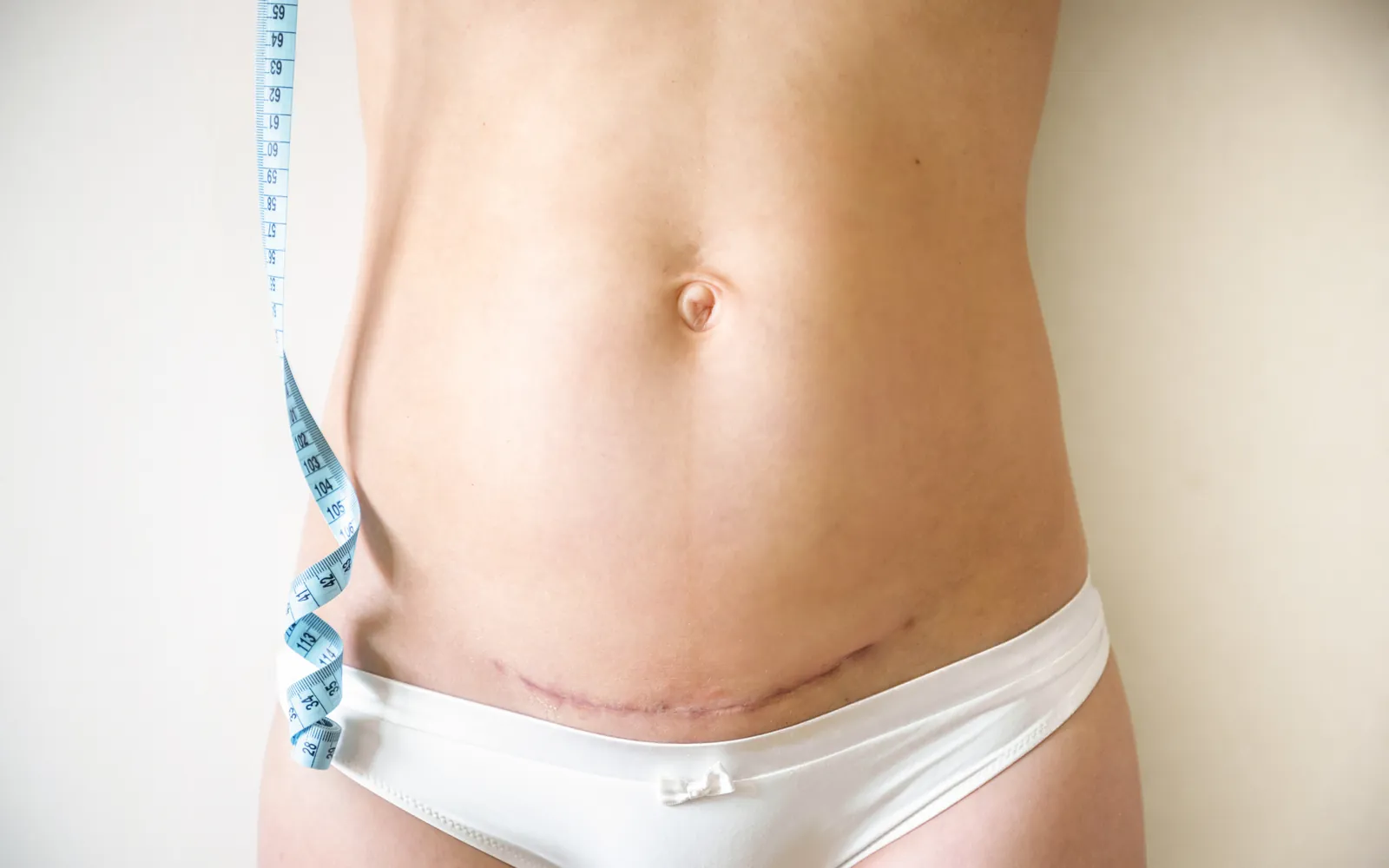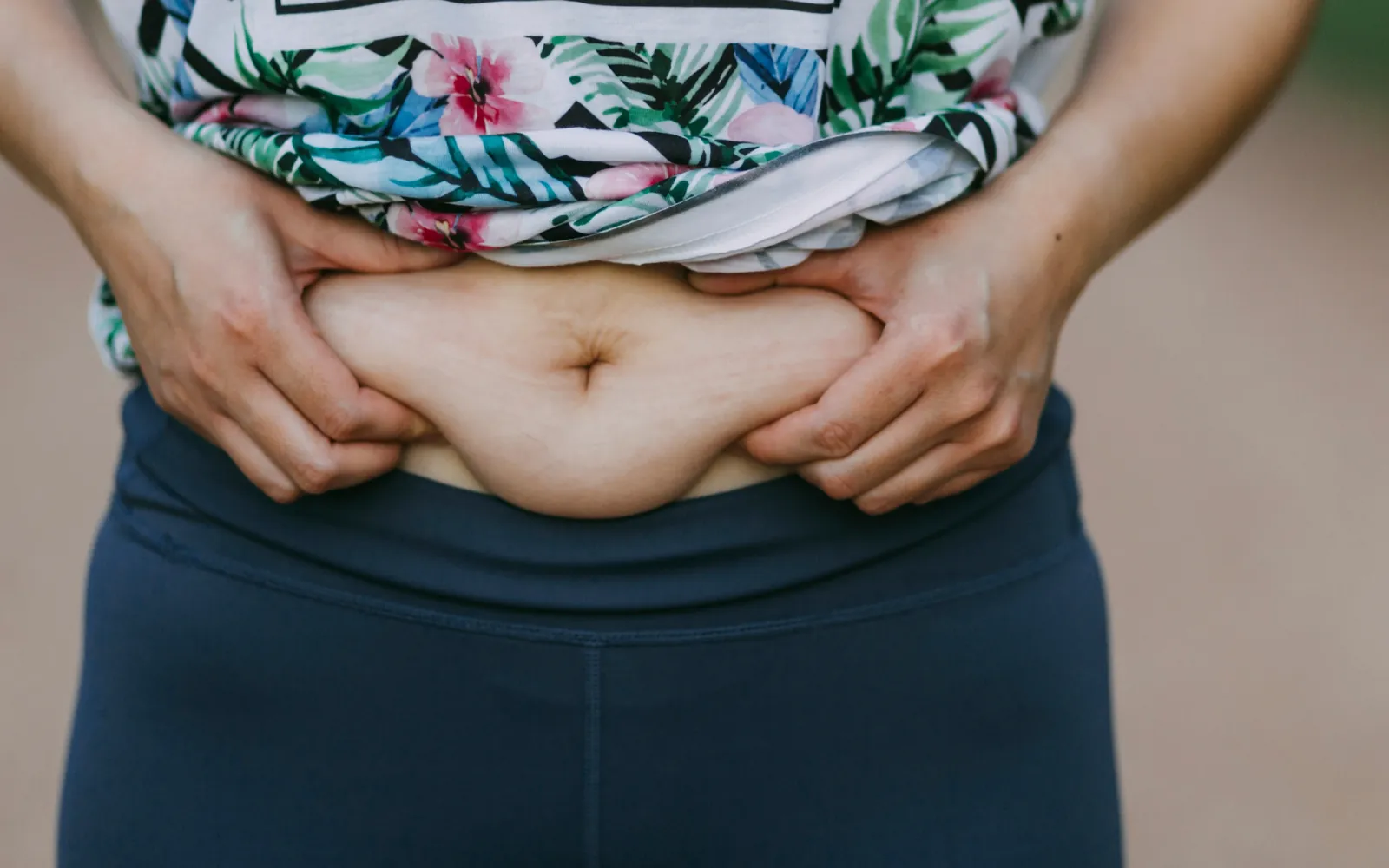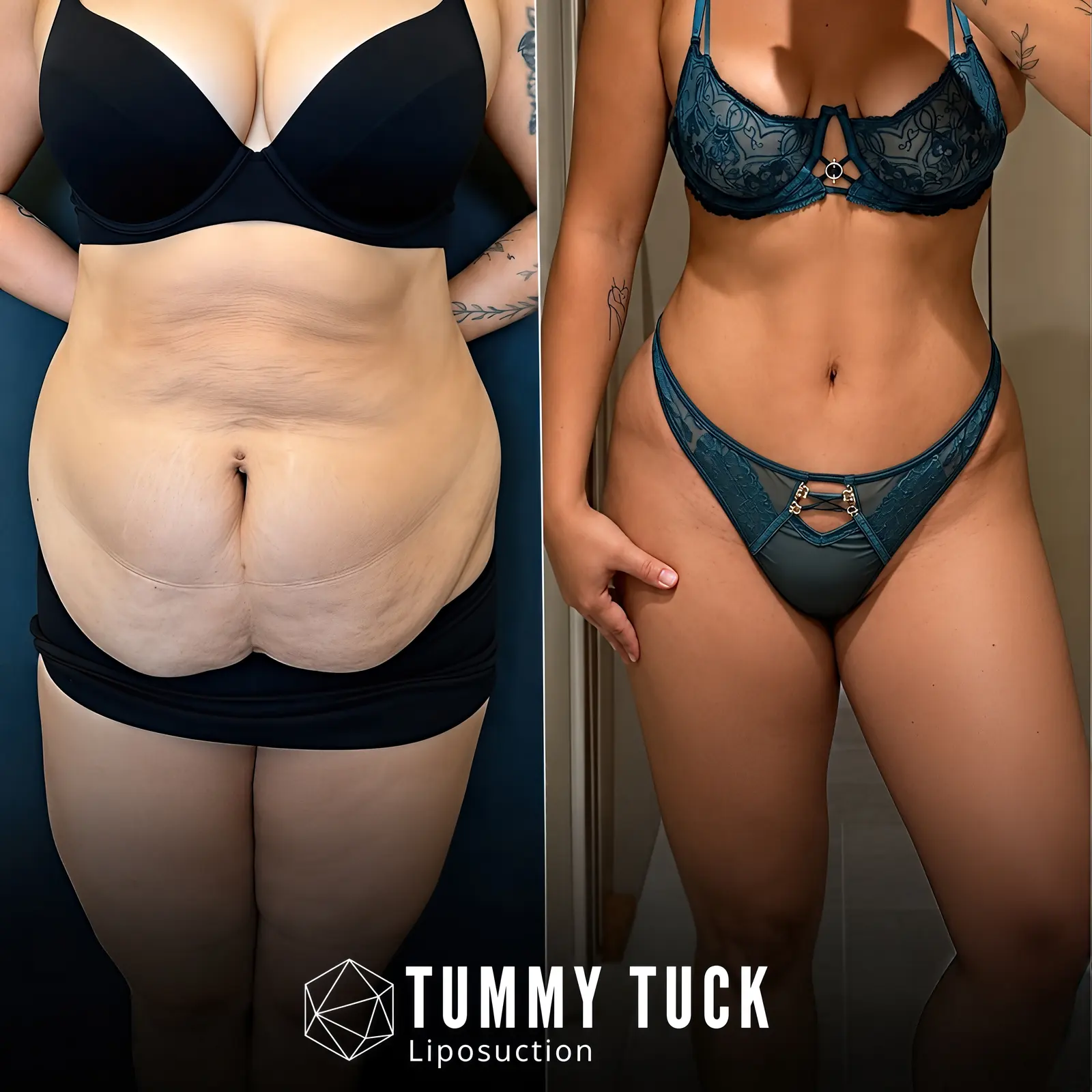
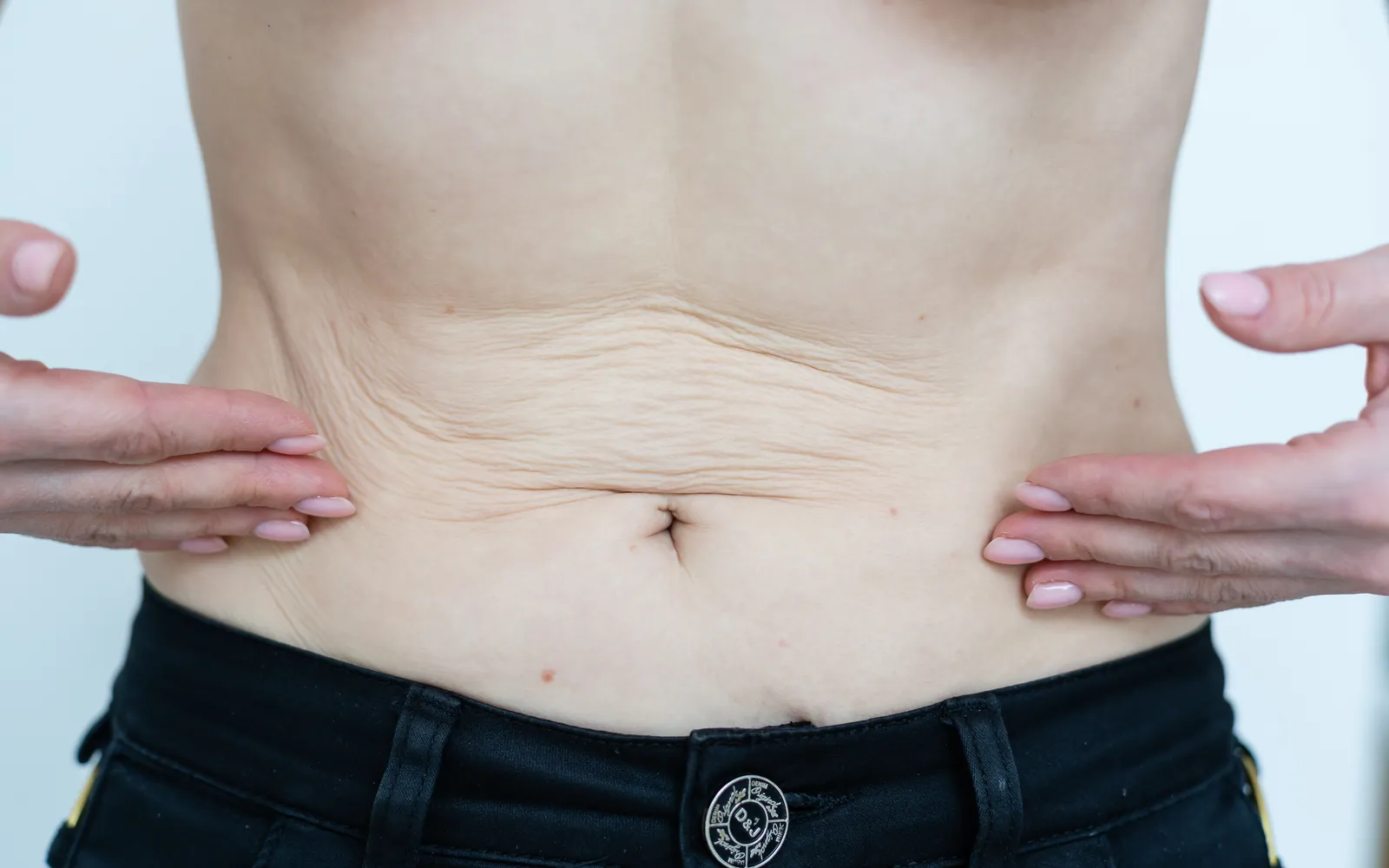
Losing a large amount of weight, whether through diet, exercise or weight-loss surgery, is a major health achievement. For many people it also leaves loose, hanging skin on the tummy, arms, thighs, breasts or back. This happens because skin that has been stretched for a long time loses some of its elastic fibres and cannot fully shrink back. Exercise and good habits help your overall shape, but significant loose skin can only be removed surgically, for example with a tummy tuck or body lift.
Why skin does not always shrink back
- Amount of weight lost: the more weight lost, the more excess skin is likely.
- Time: skin stretched for many years recovers less than skin stretched briefly.
- Age and genetics: skin elasticity naturally decreases with age and varies between people.
- Sun damage and smoking: both weaken the collagen and elastic fibres in the skin.
- Speed of weight loss: rapid weight loss gives the skin less time to adapt, although the overall amount lost usually matters more.
What prevention can and cannot do
There is no proven way to stop loose skin forming after major weight loss. Some measures do support your skin, your health and the result of any later surgery:
- Strength training builds muscle, which improves shape and firmness under the skin.
- Enough protein and fluids, plus the vitamin and mineral supplements your bariatric team prescribes.
- No smoking, and good sun protection.
- A steady pace of weight loss agreed with your doctor or dietitian.
Creams, massage and non-surgical skin tightening may help mild laxity a little, but they cannot remove folds of hanging skin. Be cautious of anything that promises otherwise.
When to consider surgery
Most plastic surgeons recommend waiting until your weight has been stable for 6–12 months. After a gastric sleeve or gastric bypass, weight usually settles around 12–18 months after the operation. Operating earlier risks new loose skin if you keep losing weight, and wounds heal better when you are well nourished. It is usually a good time to talk to a surgeon when:
- Your weight is stable and you are close to your goal
- Your blood tests, including iron, vitamins and protein levels, are in a healthy range
- You do not smoke or vape, or can stop for 4 weeks before and after surgery
- Loose skin causes rashes, irritation, difficulty exercising or trouble finding clothes that fit
Your surgical options
| Area | Operation | What to know |
|---|---|---|
| Tummy, flanks, back and buttocks | Body lift (360°) | Incision all the way around the waist at belt level; the front part is a full tummy tuck with muscle repair |
| Tummy, loose in every direction | 360 FDL body lift | Adds a vertical midline scar to narrow the waist after massive weight loss |
| Lower tummy and flanks | Extended tummy tuck | A hip-to-hip scar that continues around the hips |
| Upper arms | Arm lift | Scar along the inner arm; 1 night in hospital, about 7 days in Istanbul |
| Inner thighs | Thigh lift | Scar in the groin crease, sometimes running down the inner thigh; 2 nights in hospital, about 8 days in Istanbul |
| Breasts | Breast lift, with or without implants | Lifts and reshapes the breast; implants can restore lost volume |
| Male chest | Chest contouring | Removes loose skin and excess tissue from the chest after weight loss |
A body lift is a large operation, and recovery takes longer than after a standard tummy tuck: many patients return to desk work after 4–6 weeks. Your coordinator plans a longer stay in Istanbul when it is needed.
Breast lift after weight loss
Weight loss often reduces breast volume and leaves the skin stretched, so the breasts sit lower and look emptier. A breast lift (mastopexy) removes excess skin and raises the nipple and breast tissue to a higher position. If you would also like more fullness, implants can be placed in the same operation, or your own breast tissue can be reshaped to give a fuller, rounder look.
After major weight loss the loose skin often extends to the side of the chest and towards the armpit, so the scars may be longer than after a standard breast lift. A breast lift can be combined with an arm lift or a tummy tuck when the total operating time allows. On its own it usually means 1 night in hospital, about 7 days in Istanbul and a support bra for about 6 weeks.
Planning several operations
Many people need surgery on more than one area. Because combined operations have to stay within safe time limits, the plan is often split into stages: for example, a body lift first, then an arm lift and breast lift at least 3 months later. Your surgeon puts the stages in an order that makes sense for your body and your priorities.
Recovery needs patience. Swelling settles over 3–6 months, scars keep fading for 12–18 months, and you wear compression garments for several weeks after each stage.
When to contact your surgeon
After any body contouring operation, seek urgent care for chest pain, sudden breathlessness or a swollen, painful calf, and contact your surgeon for a fever, spreading redness or a wound that opens or oozes.
Our Tummy Tuck page explains the body lift and 360 FDL body lift alongside the other types of tummy tuck, and how your stay in Istanbul is planned. A surgeon can review your photos and weight history and suggest which areas to treat first.
Frequently asked questions
Skin may tighten a little over the first year, especially in younger people and after moderate weight loss. Folds of hanging skin after major weight loss usually do not go away without surgery.
Usually once your weight has been stable for 6–12 months, which is often 12–18 months after the operation. Your surgeon will also check your nutrition and blood tests.
Sometimes two areas can be combined, such as a tummy tuck and an arm lift. Larger plans are split into stages, usually at least 3 months apart, to keep each operation within safe limits.
Yes. A breast lift raises and reshapes the breasts after weight loss, with or without implants to restore volume. It can be combined with other body contouring when your surgeon considers it advisable.
Yes. Removing skin always leaves scars. Your surgeon places them where clothing can usually hide them, and they fade over 12–18 months.