If you are researching a hair transplant in Turkey, you will see two abbreviations everywhere: FUE and DHI. Clinics often present them as competing methods, but they are better understood as two ways of doing the same operation: moving healthy hair follicles from the back of the head to thinning areas.
What is FUE?
FUE (follicular unit excision) removes individual groups of 1–4 hairs (follicular units) from the donor area, usually the back and sides of the head, using a tiny round punch. The International Society of Hair Restoration Surgery renamed the technique from “extraction” to “excision” to make clear that it is a surgical procedure.
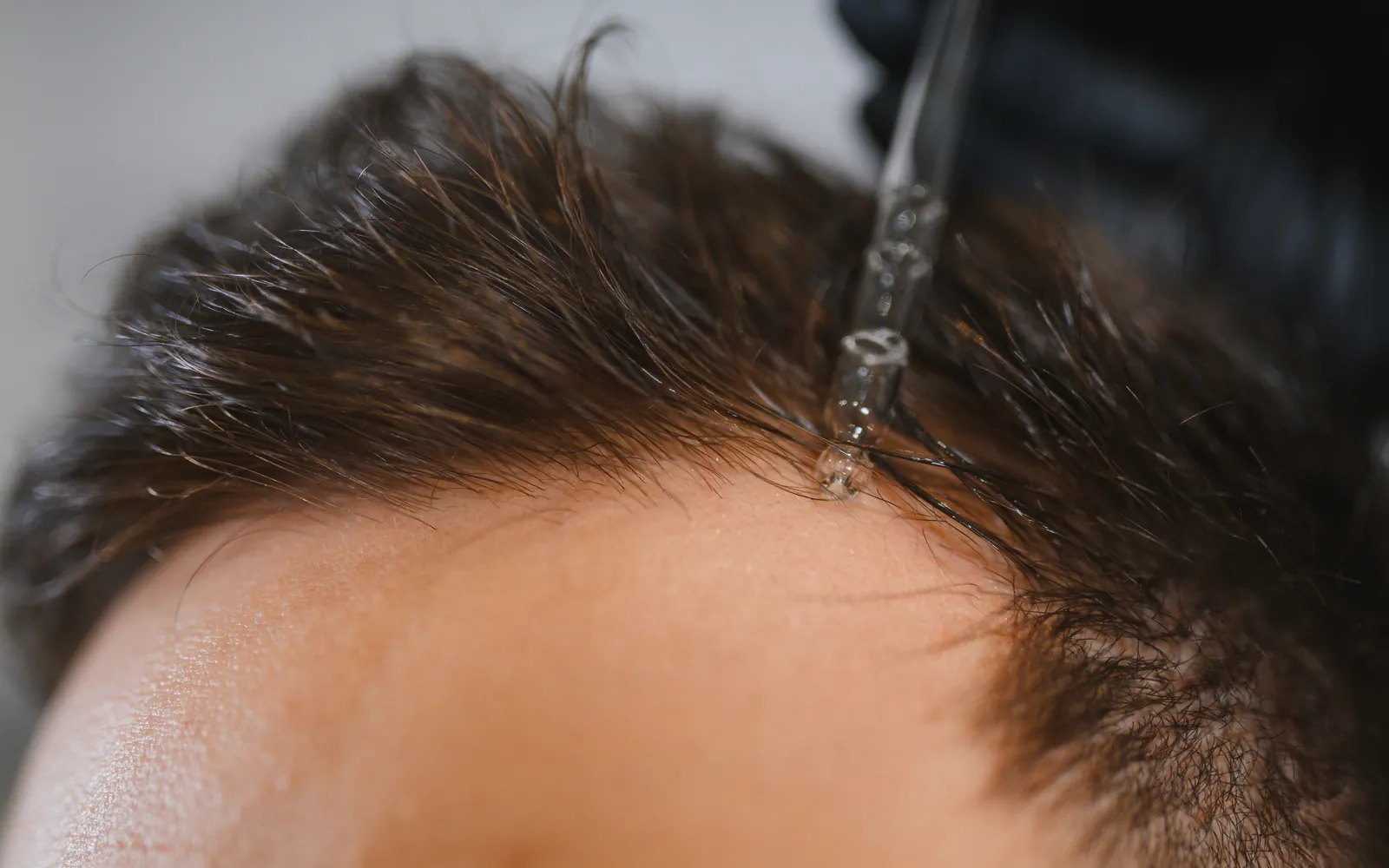
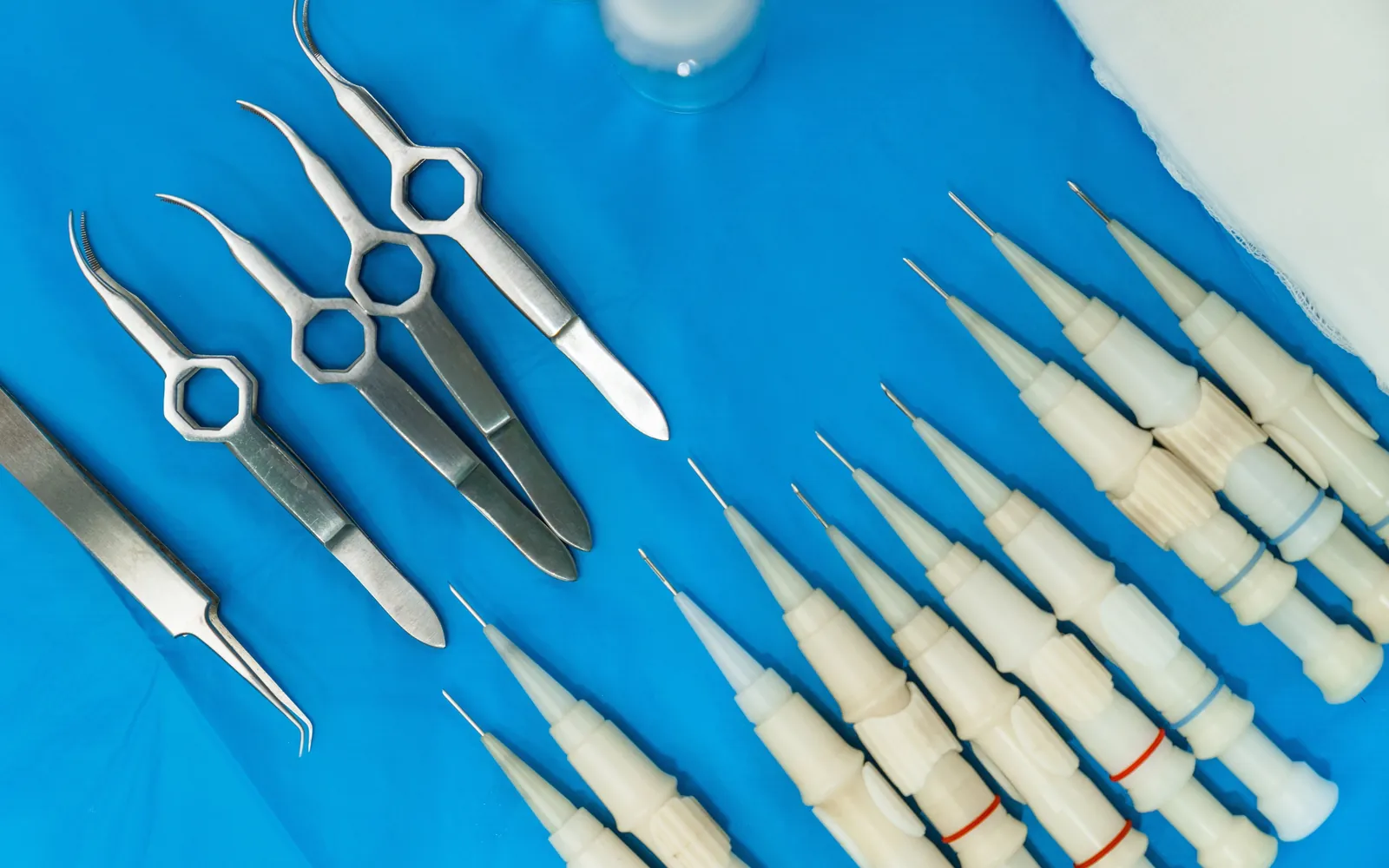
After harvesting, the surgeon opens tiny channels (incisions) in the recipient area (with a steel or sapphire blade), and the grafts are then placed into these channels with fine forceps.
What is DHI?
DHI (direct hair implantation) uses the same individual harvesting. The difference is the implantation: each graft is loaded into a pen-shaped implanter (often called a Choi pen), which creates the channel and places the graft in a single movement. The angle and depth can be controlled very precisely.
FUE vs DHI at a glance
| FUE | DHI | |
|---|---|---|
| Harvesting | Individual follicular units | Individual follicular units (same) |
| Implantation | Channels opened first, grafts placed with forceps | Implanter pen opens and implants in one step |
| Shaving | Usually required | Can often be done unshaven or partly shaven |
| Typical strength | Large areas, many grafts per session | Hairline, smaller areas, dense packing |
| Session length | Shorter for the same number of grafts | Longer and more labour-intensive |
| Recovery & growth | Similar | Similar |
Which one is right for you?
The right technique depends on your hair loss, not on a label. A surgeon looks at the size of the area to cover, the density and quality of your donor hair, your hair type and your expectations.
- Extensive thinning on the crown and top often favours FUE, because more grafts can be placed in one session.
- Refining the hairline or adding density to a limited area can favour DHI.
- If you cannot shave your head for work or personal reasons, DHI may be an option.
- Many surgeons combine both: FUE channels for large areas and DHI for the hairline.
Recovery and results
Recovery is very similar after both techniques. The small scabs in the recipient area fall off within 7–10 days, and most people return to office work within a few days.
- 1Weeks 2–6: the transplanted hairs usually shed (“shock loss”). This is normal; the follicles stay in place.
- 2Months 3–4: new hair starts to grow.
- 3Month 6: a clear difference is visible.
- 4Months 12–18: the final density and texture.
Frequently asked questions
Neither is better in general. Both harvest grafts the same way; DHI differs in how they are implanted. The right choice depends on the area to cover, your donor hair and whether you can shave your head.
It is done under local anaesthesia, so the procedure itself should not be painful beyond the initial injections. Mild soreness and swelling for a few days afterwards are common.
New hair usually starts to grow after 3–4 months, a clear change is visible at about 6 months and the final result takes 12–18 months.
FUT (follicular unit transplantation) removes a thin strip of scalp from the back of the head, which is then divided into grafts. It leaves a linear scar that can show if you wear your hair very short. Most patients today choose FUE or DHI, where grafts are taken one by one and leave only tiny dot-like marks spread over the donor area.
No. A follicle that has been extracted is moved for good, so it does not regrow at the back of the head. Because the grafts are taken evenly spread over a wide area, the remaining hair covers the gaps and the donor area keeps a natural look. Careful planning makes sure it is not overharvested.