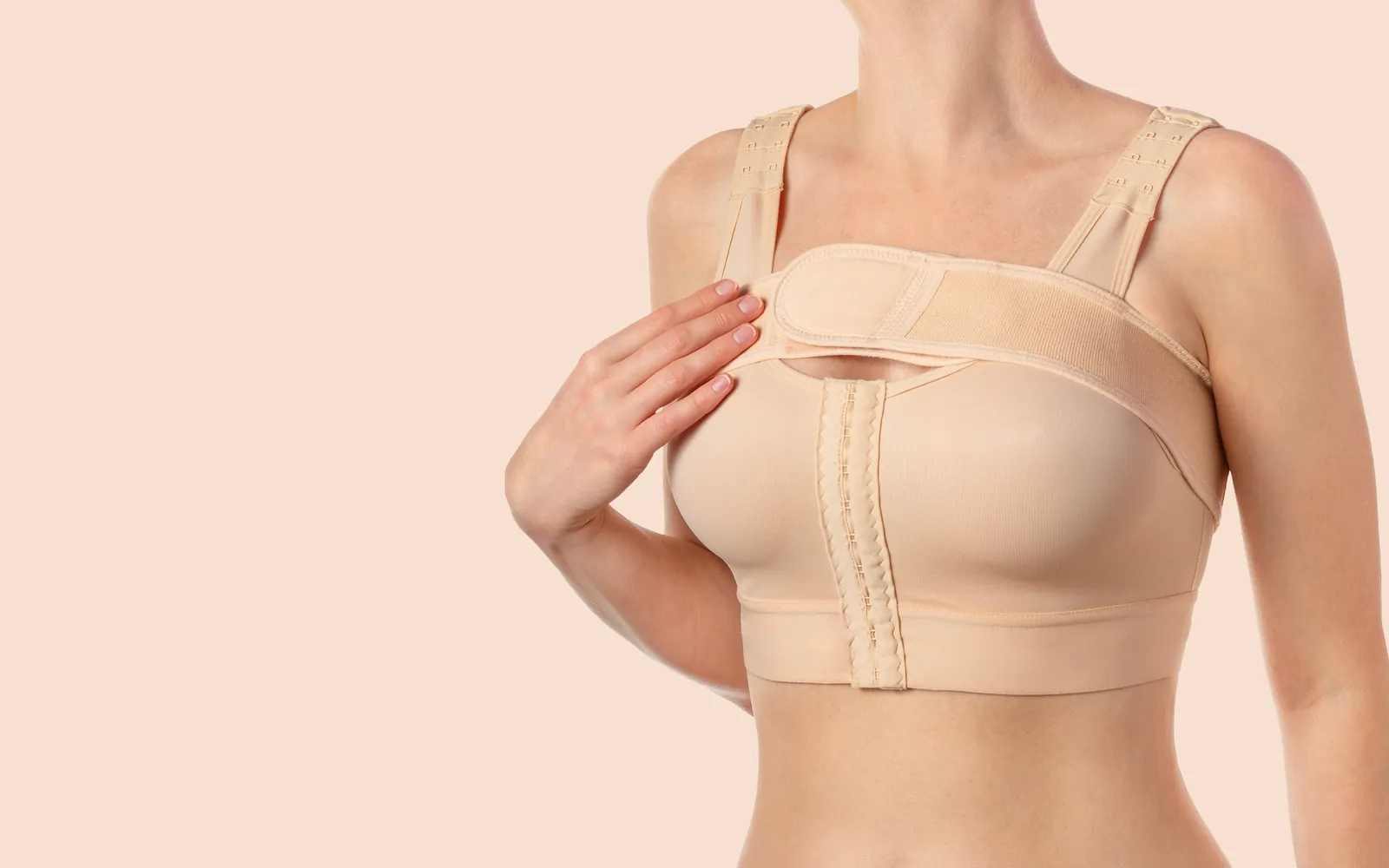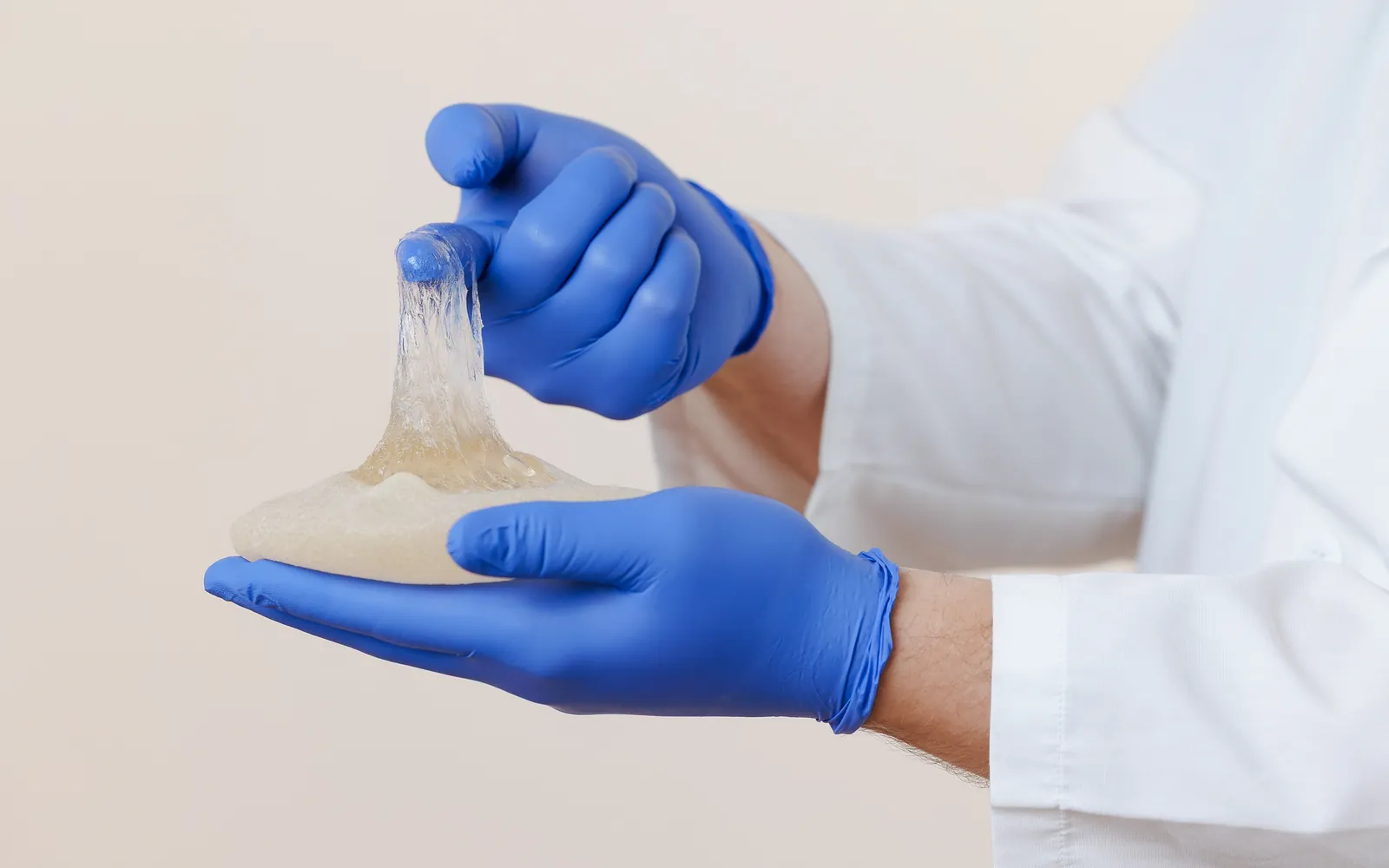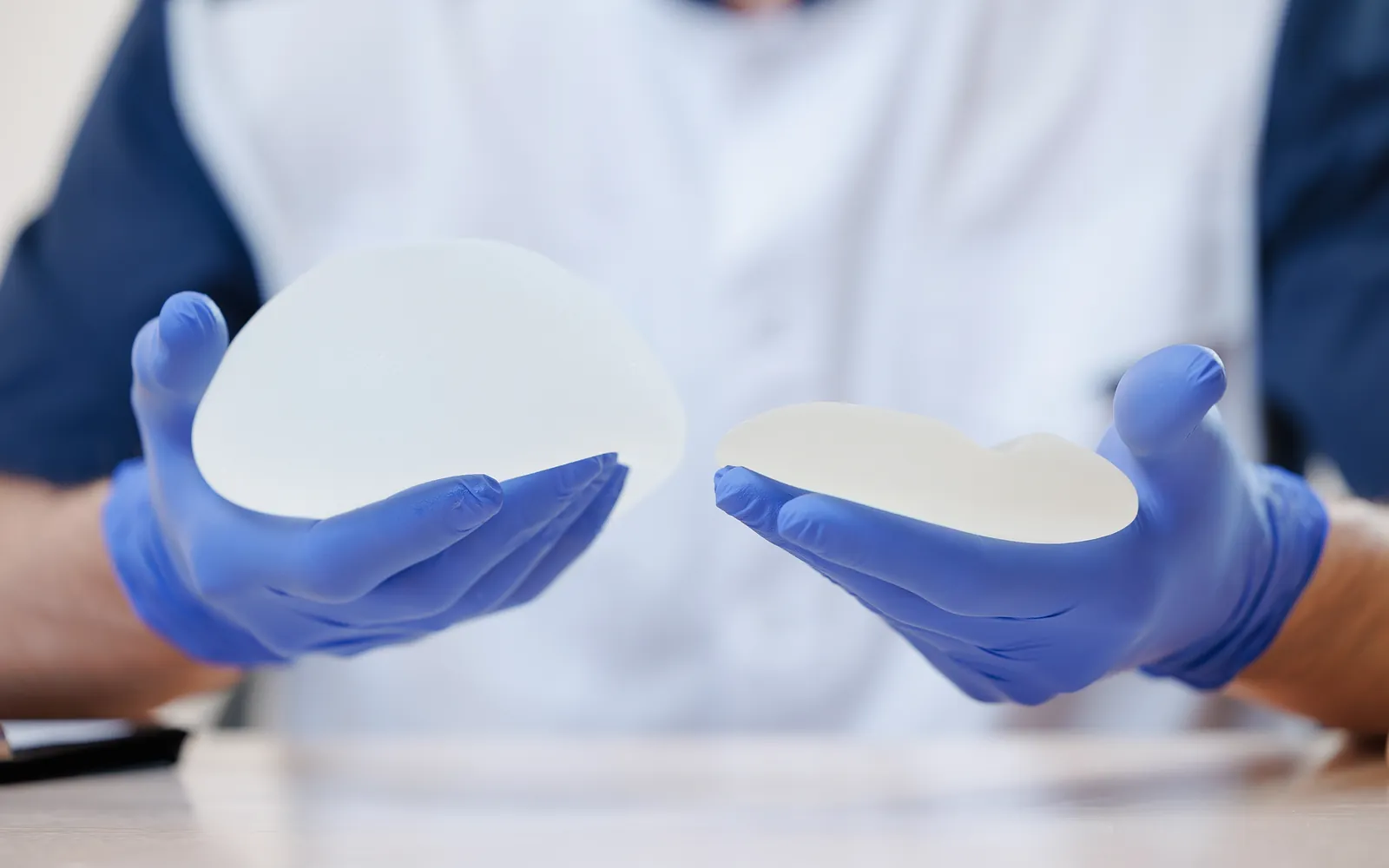
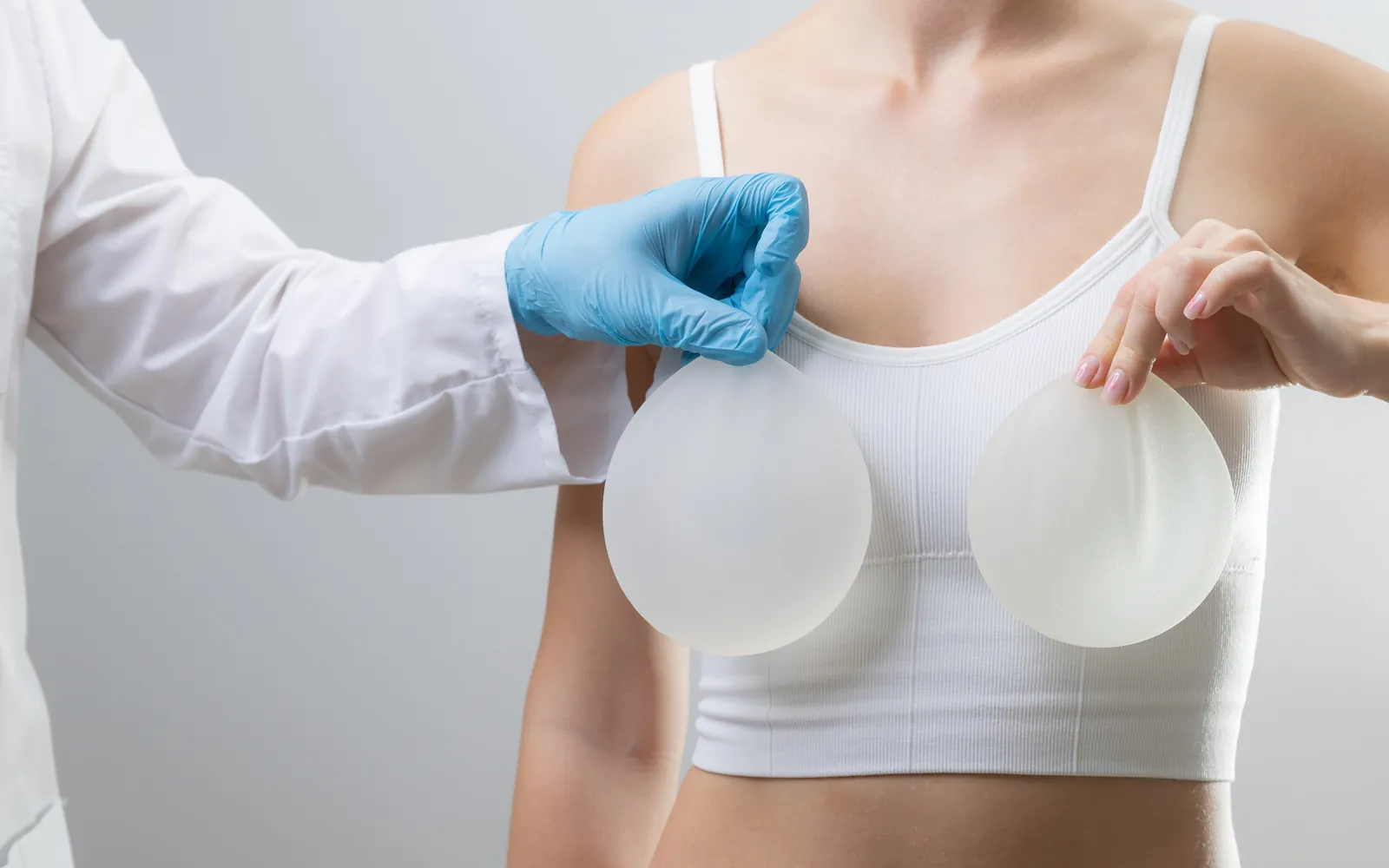
Choosing implants for a breast augmentation can feel overwhelming: shapes, profiles, fills, surfaces and pockets. In practice, your body narrows the choice a great deal. Your surgeon measures your chest and breasts, assesses your skin and tissue and shows you a range that fits. Within that range, you decide with your surgeon what look you want. This guide explains each choice so you can take part in that conversation with confidence.
Size: volume in cc
Implant size is measured as volume in cubic centimetres (cc). The same volume can look very different on two women, so cup sizes are only a rough guide. The most important measurement is the base width of your breast: an implant wider than your breast can sit too far to the side or show at the edges.
- Chest and breast width set the range of implant widths that fit.
- Skin stretch and tissue thickness decide how much volume your tissue can cover comfortably.
- Your lifestyle matters too: very large implants can make running and some sports less comfortable and put more strain on the tissue over the years.
At your consultation you try sizers in a bra and T-shirt. Most women end up choosing between two or three sizes.
Shape: round or anatomical
| Round | Anatomical (teardrop) | |
|---|---|---|
| Shape | Symmetrical, like a flattened dome | Fuller at the bottom, sloping at the top |
| Look | More fullness in the upper breast | A sloping upper pole, often described as more natural |
| If it rotates | Shape does not change | Shape can look distorted, so the surface is usually textured to hold it in place |
| Often chosen for | Most first augmentations | Women with very little tissue, or certain breast shapes |
Once a round silicone implant has settled, the gel moves downwards when you stand, so the difference between the two shapes in daily life is often smaller than people expect.
Profile: how far it projects
Implants of the same volume come in different profiles, usually described as low, moderate, high or extra high. A higher profile is narrower and projects further forward; a lower profile is wider and flatter. If you have a narrow chest but want a noticeable change, a higher profile may fit; if your chest is wide, a lower or moderate profile may look more in proportion.
Fill: silicone gel or saline
Silicone gel implants contain a cohesive gel that holds together and feels similar to breast tissue. They are used for most augmentations in Europe and Turkey. If the shell tears, the gel usually stays within the capsule, so a rupture may not be noticeable; regular imaging is recommended.
Saline implants are filled with sterile salt water. They tend to feel firmer and ripple more, especially in slim women. If they rupture, the breast deflates quickly and the salt water is absorbed harmlessly. They are used less often outside the United States.
Surface: smooth or textured
Implant shells are either smooth or textured. Anatomical implants are usually textured so they stay in position. Textured implants have been linked to a rare lymphoma called BIA-ALCL, which has led many surgeons to prefer smooth implants where possible. Ask your surgeon which surface they recommend for you and why.
Placement: above or under the muscle
| Placement | Where the implant sits | Usually suits |
|---|---|---|
| Above the muscle | Under the breast tissue, in front of the chest muscle | Women with enough breast tissue to cover the implant; recovery is often a little easier |
| Dual plane | Upper part under the muscle, lower part under the breast tissue | Slim women with little tissue of their own; softens the upper edge |
| Fully under the muscle | Mostly covered by the chest muscle | Selected cases with very thin tissue |
Implants partly under the muscle can move slightly when you tense your chest muscles, which matters to some women who do a lot of upper-body training. Your surgeon will weigh this against the benefit of extra tissue cover.
Incision: where the scar goes
Most surgeons place the implant through a 4–5 cm incision in the fold under the breast, where the scar is hidden by the breast and most bras and bikinis. It gives good control of the pocket and does not cut through the milk ducts. Incisions around the edge of the areola or in the armpit are also possible in some cases.
When an implant alone is not enough
Implants add volume, but they do not lift. If your nipples sit at or below the fold under the breast, for example after pregnancy or weight loss, an implant on its own can look bottom-heavy, and your surgeon may suggest combining it with a breast lift. If you want only a modest increase and have fat to spare, fat transfer using your own fat is an alternative, usually adding around one cup size. Your surgeon will explain which approach fits your breasts.
Questions to ask your surgeon
- Which range of sizes fits my chest and tissue, and why?
- Do you recommend round or anatomical, smooth or textured, and why?
- Will the implant sit above or partly under the muscle?
- Do I need a breast lift as well to get the shape I want?
- Are the implants CE-marked, and will I receive an implant card with the serial numbers?
- What check-ups do you recommend in the years after surgery?
Our breast augmentation page explains the placement options, implants versus fat transfer and what to expect from your consultation and stay in Istanbul.
Frequently asked questions
Your surgeon measures your chest and breast width and skin stretch and shows you the range that fits. You then try sizers in a bra and T-shirt to choose within that range.
Both can look natural. Round implants give more upper fullness; anatomical implants slope more at the top. The difference depends on your tissue, and your surgeon will advise.
Neither is right for everyone. Silicone feels more like breast tissue and is used for most augmentations in Europe and Turkey. Saline ripples more but deflates visibly if it ruptures.
A high-profile implant is narrower and projects further forward than a moderate-profile implant of the same volume.
Most women can, particularly when the implant is placed through the fold under the breast, which does not cut through the milk ducts. Tell your surgeon if you plan to have children.