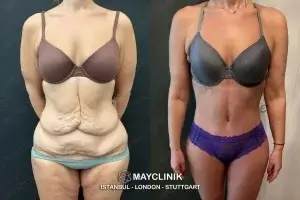




In Brazilian Butt Lift surgery (BBL), the fat, which is taken from the belly, buttocks, waist, and back with a liposuction procedure, is purified by a variety of processes and injected as micro-droplets into layers of varying depth as needed in the butt region. The fats taken from these areas are transferring to the butts. In that way, the person gets rid of extra fats and has a bigger and good shaped butt at the same time.
The most important thing in this operation is the surgeon’s experience in transferring a large amount of fat. In general, the same amount of fat is transferred to both sides of the butt and gives a symmetrical appearance. It is necessary to be careful about applying techniques for fat removal, fat isolation, and re-injection to increase the amount of fat graft and to avoid the formation of nodules and fluid cysts. When we consider that some of the fat will disappear after a period of time, it is better to transfer more fat from the required amount and the surgeon should arrange that carefully. At this point, an experienced surgeon is really important once again.
How Long Does Recovery After a BBL Take?
Recovery after a Brazilian Butt Lift is different from most body procedures, because the transferred fat has to establish its own blood supply before it can survive permanently and pressure is what interferes with that. For the first two weeks you should avoid sitting directly on the buttocks; patients sleep on their front or side and use a specially shaped cushion that shifts the weight onto the thighs when sitting cannot be avoided. From week three onward, short periods of normal sitting are usually permitted, and by week six most patients return to sitting without restriction. The liposuction side of the operation follows its own timeline: swelling and bruising across the abdomen, waist and back peak in the first week, and a compression garment is worn continuously through the first two weeks to keep the treated areas smooth. Light walking is encouraged from the first day, since it supports circulation, but structured exercise waits until your surgeon clears it, typically at four to six weeks. Most people with office based work return after ten to fourteen days. The shape continues to refine for several months as swelling resolves, so the early weeks are not a fair preview of the result.
Another advantage of this method, which helps reshape the body, especially the part between the waist and the hip area, is that the fat injected into the butt area is long-lasting and safe, since it is the person’s own tissue.
The fat is taken from the body with liposuction and transferring to the butt for a more lifted appearance. This operation does not need to stitch and for this reason, there will be no scar too. That is why you don’t need to be concerned about the scar over your butt area.
How Much of the Transferred Fat Survives, and Is the Result Permanent?
Not every fat cell that is transferred will stay. The grafted fat has no blood supply of its own at the moment of injection, and only the cells that successfully connect to surrounding tissue survive long term. In practice, a meaningful proportion is reabsorbed during the first three months, which is exactly why an experienced surgeon transfers more than the target volume and distributes it as fine micro droplets across different depths rather than in large pockets small droplets sit closer to a blood supply and survive at a much higher rate. Once that early period has passed, the fat that remains behaves like any other fat in your body: it is your own living tissue, it is not an implant, and it does not need to be replaced or maintained. That also means it responds to weight change. Significant weight loss after a BBL will reduce the volume, and substantial weight gain will increase it, so a stable weight is what keeps the result consistent. The final shape should be assessed at around six months, when swelling has fully settled and the surviving graft is established.